🚀 Starship Achieves Orbit, Deploys Next-Gen Starlinks
SpaceX's Starship successfully reaches orbit, deploying 26 Starlink V3 satellites, marking a significant milestone in deep-space transport and satellite internet expansion.
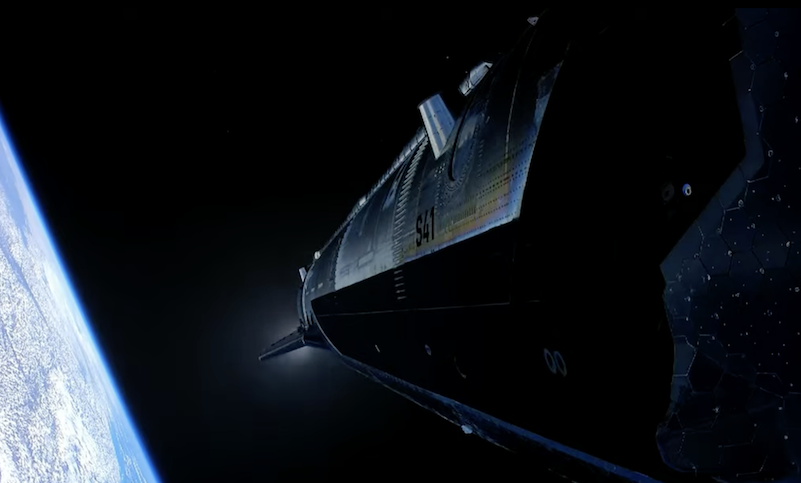
Starship's Orbital Flight
SpaceX's Starship-Super Heavy launch system successfully completed its first orbital flight, marking a decade of development. The launch took place from SpaceX's Starbase spaceport in Texas on September 28th. This achievement is a significant leap forward for SpaceX's deep-space transport capabilities.
Historical Context
The successful orbital flight of Starship comes 18 years after SpaceX's first orbital launch with the Falcon 1 rocket. This milestone was nearly a decade in the making, with over 700 Falcon 9 flights and 13 suborbital flights of Starship precede it.
Technical Details
The Super Heavy first stage, powered by 33 methane-fueled Raptor 3 engines, experienced a single engine failure shortly after liftoff. However, this did not affect the booster's performance. The Starship upper stage successfully separated and continued its trajectory. The mission also saw the deployment of 26 Starlink V3 satellites into orbit, enhancing the Starlink network's capacity.
Engine Performance
The Starship is powered by three types of Raptors: three sea-level Raptors and three vacuum-optimized Raptors. One of the vacuum-optimized Raptors failed during the ascent, but the remaining engines compensated for the loss. This highlights the redundancy and reliability of the Starship's propulsion system.
Satellite Deployment
The 26 Starlink V3 satellites deployed by Starship are expected to add 26 Tbps of capability to the Starlink network. SpaceX plans to fly up to 60 V3 Starlinks on Starship missions, significantly increasing the network's capacity compared to Falcon 9 missions.
“We were going to get the data that we wanted, so we made the call to do this earlier reentry,”
— Dan Huot
By Chaos Lab · 妙答星球AI