🚀 SpaceX Starship Achieves Orbit, Deploys Starlinks
SpaceX's Starship completes first orbital flight, deploying next-gen Starlink satellites, marking a decade of development.
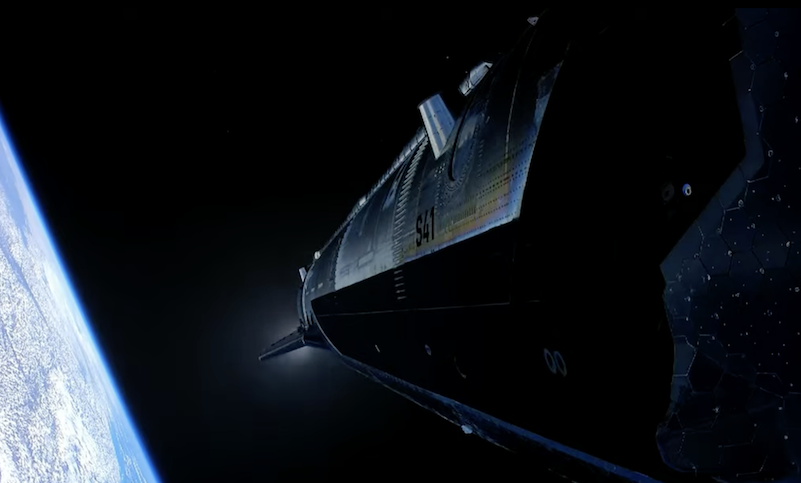
Starship's Decade of Development
SpaceX's decade-long journey culminated in the first orbital flight of the Starship, a reusable deep-space transport. The launch, which took place from the Starbase spaceport in Texas, marks a significant milestone for the company.
This achievement comes 18 years after SpaceX's initial foray into space with the Falcon 1 rocket, a venture that was nearly business-ending. The Falcon 9 followed, with over 700 flights, solidifying SpaceX's presence in the industry.
Launch Details
The Starship-Super Heavy launch system lifted off at 8:48 a.m. EDT on September 28. It was 18 years to the day since SpaceX's first orbiting with Falcon 1. The Super Heavy's 33 methane-fueled Raptor 3 engines propelled the system, with one engine failure occurring shortly after liftoff but not affecting performance.
Engine and Performance Issues
During the boost-back burn, a second engine failure brought the hardware to operational limits. The Super Heavy booster splashdown was successful, marking the first for the Super Heavy Version 3 (V3) rocket. However, the booster exploded after splashdown during a test of the automated flight termination system.
Despite these challenges, the Starship upper stage continued to climb, with one of its six engines shutting down prematurely. The remaining engines compensated, and the Starship successfully avoided the planned orbital insertion burn due to the engine failure.
Orbital Insertion and Satellite Deployment
Engineers quickly determined that the necessary engines for orbit insertion and deorbit were isolated from the failed engine. The Starship successfully deployed 26 Starlink V3 satellites into orbit, adding 26 Tbps to the Starlink network.
SpaceX plans to fly up to 60 V3 Starlinks on Starship missions, equivalent to the capacity of 20 Falcon 9 missions. The initial six-orbit mission was shortened, with the Starship deorbiting and splashing down into the Pacific Ocean earlier than planned.
Reentry and Recovery
The Starship's deorbit burn occurred at 11:01 a.m. EDT, followed by a successful three-engine landing burn. However, the vehicle did not survive the impact upon splashdown, unlike previous missions.
SpaceX is aiming for a quick turnaround for Flight 15, potentially including a tower catch of the returning Super Heavy booster and Starship.
“Congrats SpaceX, gorgeous launch, getting Ship to orbit and managing every step in a safe, responsible, and especially inspirational way.”
— NASA Administrator Jared Isaacman
By Chaos Lab · 妙答星球AI